Skip to content

Planning a stay at the Brahma Kumaris in Mount Abu? This complete guide explains the main Brahma Kumaris campuses, accommodation options, booking process, visitor guidelines, meditation and course information, travel options, and important things to know before your visit.
The Brahma Kumaris headquarters in the Mount Abu region includes important campuses such as Pandav Bhawan, Shantivan and Gyan Sarovar. Each campus has a different purpose and visitor experience, so choosing the right one is important when planning your trip.
Whether you are visiting for meditation, a spiritual programme, a short retreat or simply to experience the peaceful environment of the Brahma Kumaris, this guide will help you understand where to go, how to plan your stay and what to expect.

Brahma Kumaris Mount Abu Stay: Quick Overview
| Information | Details |
| Main campuses | Pandav Bhawan, Gyan Sarovar & Shantivan |
| Mount Abu campuses | Pandav Bhawan & Gyan Sarovar |
| Abu Road campus | Shantivan |
| Nearest railway station | Abu Road |
| Spiritual practice | Raja Yoga Meditation |
| Accommodation | Depends on campus, programme, eligibility & availability |
| Food | Vegetarian/satvik arrangements may be available depending on campus |
| Booking | Confirm directly with the relevant centre/accommodation office |
| Best planning period | Book/check availability well in advance during major events |
About the Brahma Kumaris Headquarters in Mount Abu
Mount Abu is closely associated with the Brahma Kumaris and their headquarters. The organisation’s history in Mount Abu dates back to 1950, and the headquarters today includes several important campuses serving different spiritual, educational and residential purposes.
The three campuses most relevant to visitors are Pandav Bhawan, Shantivan and Gyan Sarovar. While they are part of the wider Brahma Kumaris headquarters network, they are located in different places and serve different purposes.
Understanding this difference can make your visit much easier, particularly if you are travelling specifically for accommodation or a spiritual programme.
Why Visit the Brahma Kumaris in Mount Abu?
A visit to the Brahma Kumaris in Mount Abu is an opportunity to step away from a busy routine and spend time in an environment focused on meditation, self-development, spiritual learning and inner peace.
Depending on the campus and programme, visitors may experience meditation sessions, spiritual classes, residential programmes, peaceful gardens and opportunities for personal reflection.
The experience can be different from a conventional holiday or hotel stay. Visitors are encouraged to follow the campus schedule, maintain a peaceful atmosphere and respect the spiritual environment.
If Mount Abu is not part of your immediate travel plans, you can also explore Brahma Kumaris centres in other cities. Our guide to Brahma Kumaris Hyderabad provides information about meditation and spiritual centres available in Hyderabad.
Main Brahma Kumaris Campuses Near Mount Abu
| Campus | Location | Main Purpose |
| Pandav Bhawan | Mount Abu | Historic headquarters, meditation & spiritual experience |
| Gyan Sarovar | Mount Abu | Residential courses & personal development programmes |
| Shantivan | Near Abu Road | Large gatherings, spiritual programmes & retreats |
Brahma Kumaris Mount Abu Accommodation Options
Accommodation arrangements can vary depending on the campus, programme, visitor category, availability and current centre guidelines. Always confirm the latest accommodation rules before travelling.
1. Short Spiritual Visits
Visitors coming for a short spiritual visit, meditation, course or programme should first confirm accommodation availability with the relevant campus.
Depending on the purpose of your visit, you may also choose to stay at a hotel or guest accommodation nearby and visit the Brahma Kumaris Centre during the day.
2. Residential Programmes
Gyan Sarovar is particularly associated with residential programmes and courses focused on personal development and meditation. The official Brahma Kumaris website describes Gyan Sarovar as a residential campus offering programmes and courses in a peaceful natural setting.
3. Long-Term Spiritual Life
Long-term or dedicated service arrangements are different from a normal visitor stay and may involve specific requirements and approval processes.
If you are interested in a long-term stay, contact your local Brahma Kumaris centre and ask about the current process rather than assuming that short-stay visitor rules apply.
How to Book Brahma Kumaris Accommodation
If you are planning to stay at a Brahma Kumaris campus, it is best to confirm the arrangements before travelling.
Step 1: Decide Which Campus You Need
Choose between:
- Pandav Bhawan
- Shantivan
- Gyan Sarovar
Your choice should depend on whether you are visiting for a general visit, spiritual programme, residential course or event.
Step 2: Contact the Relevant Centre
Contact the relevant accommodation office or your nearest Brahma Kumaris centre to ask about current availability and eligibility.
Step 3: Confirm Your Stay
Before travelling, confirm:
- Accommodation availability
- Check-in and check-out dates
- Eligibility requirements
- Current accommodation charges, if any
- Meal arrangements
- Required documents or confirmation
- Programme timings
Step 4: Keep Your Confirmation
Keep any booking or programme confirmation with you while travelling.
Important: Accommodation arrangements can change depending on programmes, events and availability. Always confirm the latest information directly with the relevant centre.
Brahma Kumaris Accommodation Contact Details
The following contact details are provided for visitor convenience. Please verify the latest numbers with the relevant Brahma Kumaris centre before travelling, as accommodation arrangements and contact details may change.
- Pandav Bhawan / Om Shanti Bhawan, +91 94141 51111
- Shantivan Accommodation, +91 99993 44666
- Gyan Sarovar, +91 94140 03041
- BK Naresh (Gyan Sarovar Accommodation), 02974-238788
What Is a Typical Day Like?
A day at a Brahma Kumaris campus can include meditation, spiritual study, meals, personal reflection and service.
A typical routine may include:
- Early morning meditation
- Morning spiritual study
- Breakfast
- Seva or personal time
- Afternoon/evening meditation
- Spiritual classes or programmes
- Quiet reflection
Timings vary by campus, programme and day. Always check the current schedule at the centre where you are staying.
What Food Is Served?
Visitors should expect a simple, vegetarian/satvik food environment consistent with the spiritual setting of the Brahma Kumaris.
Meal timings and arrangements can differ between campuses and programmes, so confirm the current food arrangements when you make your accommodation enquiry.
If you have specific dietary requirements, inform the relevant centre in advance.
Dress Code and Visitor Etiquette
Visitors are encouraged to dress modestly and comfortably in a way that respects the peaceful spiritual environment.
Recommended:
- Simple, modest clothing
- Comfortable clothes suitable for meditation
- Light-coloured clothing where appropriate
- Comfortable footwear
- Minimal distractions inside meditation spaces
While visiting:
- Maintain silence in designated areas
- Follow the centre’s instructions
- Keep mobile phones on silent
- Arrive on time for programmes
- Respect photography restrictions
- Follow campus rules regarding food and personal conduct
Learning Raja Yoga Meditation
Raja Yoga Meditation is an important part of the Brahma Kumaris’ spiritual practice. The practice focuses on developing awareness of the self as a soul and cultivating a conscious connection with the Supreme Soul.
For those who want to continue their spiritual study beyond a visit to Mount Abu, daily spiritual study is an important part of the Brahma Kumaris experience. You can also explore our guide to Brahma Kumaris Daily Murli to learn more about the daily Murli and its availability in different languages.
For people who are new to Brahma Kumaris, the organisation offers an introductory 7-day Spiritual Knowledge/Raja Yoga course through its centres.
If you would like to begin learning Rajyoga before travelling to Mount Abu, you can also find a local centre near you. For example, our guide to Brahma Kumaris Lucknow covers Rajyoga meditation centres and useful information for visitors in Lucknow.
If you are visiting Mount Abu for the first time, consider contacting a Brahma Kumaris centre near your home before travelling to understand the introductory course and current programme options.
If you are interested in exploring Brahma Kumaris centres beyond Mount Abu, you can also explore our guide to the 10 Brahma Kumaris Centres List in India, covering important meditation and spiritual centres across different cities.
Pandav Bhawan vs Shantivan vs Gyan Sarovar
The Brahma Kumaris headquarters has several important campuses, but they are not interchangeable.
Pandav Bhawan
Pandav Bhawan is described by the Brahma Kumaris as its oldest campus. It is a significant spiritual location with meditation spaces, a library and the Tower of Peace.
Best suited for:
Visitors interested in the history, spiritual atmosphere and original headquarters environment of the Brahma Kumaris.
Shantivan
Shantivan is a major Brahma Kumaris campus near Abu Road and is known for large spiritual gatherings and its Diamond Hall, which the official site says can accommodate 20,000 people.
Best suited for:
Visitors attending large gatherings, programmes, retreats and spiritual events.
Gyan Sarovar
Gyan Sarovar is located in the Aravalli hills and is designed around residential programmes and courses focused on personal development and meditation. The official Brahma Kumaris site describes the campus as covering 35 acres and being around four kilometres from Pandav Bhawan.
Best suited for:
Visitors attending residential courses and deeper spiritual learning programmes.
Visitor Guidelines: What to Know Before You Visit
Before travelling to a Brahma Kumaris campus:
- Confirm your accommodation in advance.
- Check the current programme schedule.
- Confirm the correct campus location.
- Carry valid identification if required.
- Wear comfortable and modest clothing.
- Follow meditation and silence guidelines.
- Respect photography and mobile-phone rules.
- Carry personal medicines and essentials.
- Keep your travel confirmation and contact details accessible.
Tip: If you are visiting during a major spiritual gathering or event, make your travel and accommodation arrangements well in advance.
If you are not planning to travel to Mount Abu yet, you can begin your Rajyoga journey at a Brahma Kumaris centre in your own city. Our guide to Brahma Kumaris Bangalore provides information about meditation and retreat centres available in Bengaluru.
Best Time to Visit Brahma Kumaris Mount Abu
Mount Abu has a pleasant climate compared with many parts of Rajasthan, making it possible to visit throughout the year.
October to March
A comfortable period for travel and sightseeing, with cooler weather.
April to June
Warmer months, although Mount Abu’s hill location can make the climate more comfortable than the surrounding plains.
July to September
The monsoon can bring greener surroundings and a different atmosphere, although travellers should check current road and weather conditions.
During Major Brahma Kumaris Events
If you are planning your Mount Abu visit around a major Brahma Kumaris gathering, it is important to check the programme dates and arrange accommodation and travel well in advance. Visitors interested in Avyakt Milan programmes can also refer to our detailed guide to Baba Milan Dates 2026-27 before planning their journey.
Always check the official Brahma Kumaris event schedule before finalising your travel dates.
Is Shantivan in Mount Abu or Abu Road?
One of the most common points of confusion for first-time visitors is the difference between Mount Abu and Abu Road.
Pandav Bhawan and Gyan Sarovar are associated with Mount Abu, while Shantivan is located near Abu Road. These campuses are part of the wider Brahma Kumaris headquarters network but are geographically separate.
Therefore, when making travel or accommodation plans, check the exact campus location before booking your transport.
How to Reach Brahma Kumaris Mount Abu
By Train
Abu Road Railway Station is the nearest major railway station for Mount Abu and is connected with several major Indian cities.
From Abu Road, travellers can continue by taxi, bus or other local transport to Mount Abu.
If your destination is Shantivan, remember that Shantivan is near Abu Road rather than in the hill town of Mount Abu.
By Air
Udaipur is one of the closest major airports for travellers flying to the region. Ahmedabad is another option depending on your starting city and travel plans.
Because travel times can vary, check current road conditions and transport availability before your journey.
By Road
Mount Abu and Abu Road are connected by road with major cities in Rajasthan and Gujarat.
For the most convenient route, first identify whether your destination is:
Shantivan → Abu Road
or
Pandav Bhawan / Gyan Sarovar → Mount Abu
For visitors travelling from Rajasthan, Jaipur is another city with Brahma Kumaris centres where people can explore Rajyoga meditation and spiritual knowledge. You can learn more through our guide to Brahma Kumaris Jaipur before planning your visit.
How Far Is Shantivan From Abu Road Railway Station?
Shantivan is located near Abu Road and is significantly more convenient to reach from Abu Road Railway Station than from Mount Abu town.
If you are visiting Shantivan specifically, plan your journey around Abu Road Railway Station rather than first travelling up to Mount Abu.
If your destination is Pandav Bhawan or Gyan Sarovar, you will need to continue onward toward Mount Abu.
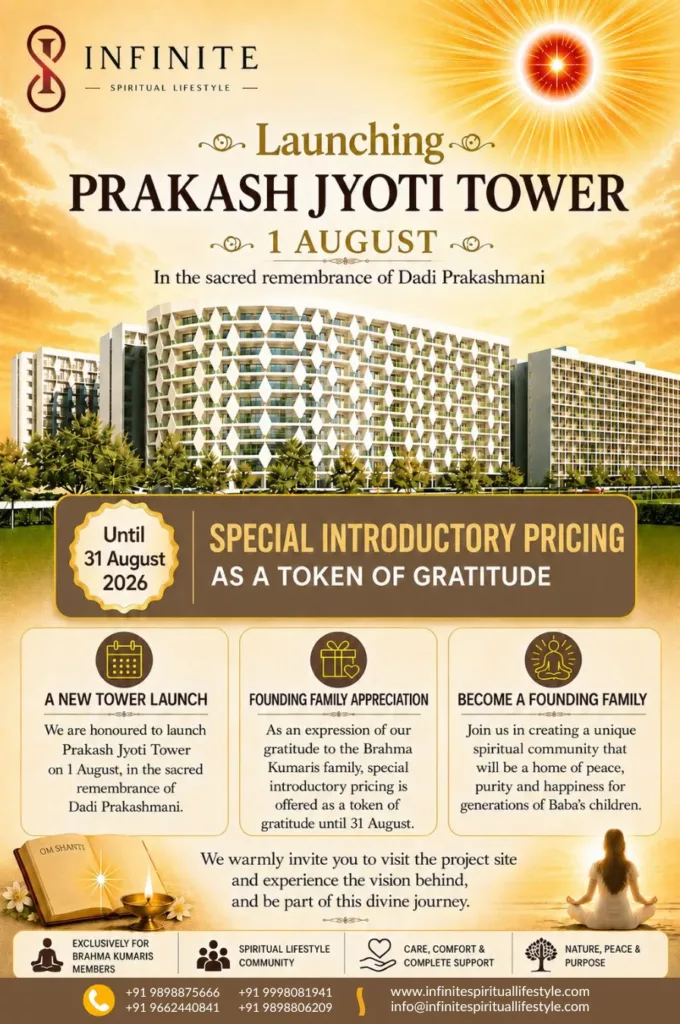
Looking for a Long-Term Home Near Shantivan?

A short visit to the Brahma Kumaris can inspire people to explore a more permanent spiritual lifestyle in the Abu Road region.
For those looking for a residential home rather than short-term accommodation, Infinite Spiritual Lifestyle offers a community designed around peaceful living, wellness and everyday convenience.
Located approximately 2.2 km from Brahma Kumaris Shantivan, the development offers Studio, 1 BHK and 2 BHK residences along with amenities focused on wellness, meditation, healthcare, dining and community living.
Explore Infinite Spiritual Lifestyle
Studio | 1 BHK | 2 BHK
Meditation | Wellness | Healthcare | Dining | Community
Short Spiritual Stay vs Long-Term Spiritual Living
| Short Stay at a Centre | Long-Term Residential Living |
| Temporary accommodation | Permanent/long-term home |
| Designed around a programme or visit | Designed around everyday living |
| Centre-based routine | Independent residential lifestyle |
| Limited stay | Long-term option |
| Spiritual retreat experience | Everyday community living |
| Accommodation availability varies | Choose your own residence |
What Should You Carry for a Brahma Kumaris Stay?
Pack light, but make sure you have your basic personal requirements.
Essentials
- Government ID
- Booking/programme confirmation
- Comfortable modest clothing
- Personal toiletries
- Regular medicines
- Water bottle
- Comfortable footwear
- Phone charger/power bank
- Small notebook and pen
If you have specific accommodation requirements, confirm them before travelling.
First-Time Visitor Guide
If this is your first visit to the Brahma Kumaris in Mount Abu, don’t try to plan everything at once.
Start by deciding your purpose:
I want to learn meditation
→ Contact your nearest Brahma Kumaris centre.
If you are travelling from Delhi or simply want to learn Rajyoga closer to home, you can explore our guide to Brahma Kumaris Delhi, which covers Rajyoga meditation centres and related information across the city.
I want to attend a spiritual programme
→ Check the relevant campus/event.
I want accommodation
→ Contact the appropriate accommodation office before travelling.
I want to visit Shantivan
→ Plan your journey through Abu Road.
I want to visit Pandav Bhawan or Gyan Sarovar
→ Plan your journey toward Mount Abu.
If you are looking for a Brahma Kumaris centre closer to your home rather than travelling to Mount Abu, you can explore our guide to Brahma Kumaris Indore and discover the Rajyoga meditation centres available in the city.
Conclusion
A visit to the Brahma Kumaris in Mount Abu can be a meaningful opportunity to experience meditation, spiritual learning and a peaceful environment.
Before travelling, identify the campus you want to visit, confirm accommodation availability and check the latest programme schedule.
If your visit inspires you to explore a longer-term residential lifestyle near Shantivan, you can also explore Infinite Spiritual Lifestyle, located approximately 2.2 km from Shantivan.
The Brahma Kumaris’ spiritual centres extend beyond India, offering spaces for meditation, retreats and spiritual learning in different parts of the world. If you are interested in exploring an international retreat destination, read our guide to Brahma Kumaris Oxford and the Global Retreat Centre.
Frequently Asked Questions
1. Can anyone visit the Brahma Kumaris in Mount Abu?
The Brahma Kumaris welcomes people interested in learning about Raja Yoga Meditation and spiritual knowledge. However, accommodation eligibility and programme participation can vary by campus and event. Confirm the current requirements before travelling.
2. Is Brahma Kumaris accommodation free?
Do not assume that accommodation is universally free. Stay arrangements can vary depending on the campus, programme, visitor category and availability. Confirm the latest information directly with the relevant centre.
3. How can I book a Brahma Kumaris stay in Mount Abu?
Contact the relevant Brahma Kumaris centre or accommodation office before travelling. Provide your intended dates and reason for visiting and confirm availability, eligibility and current arrangements.
4. Which Brahma Kumaris campus should I visit?
Pandav Bhawan is the oldest campus, Gyan Sarovar is known for residential programmes and courses, and Shantivan is a major campus near Abu Road used for large spiritual gatherings and programmes.
5. Is Shantivan in Mount Abu?
No. Shantivan is near Abu Road, while Pandav Bhawan and Gyan Sarovar are associated with Mount Abu.
6. What is the nearest railway station to Mount Abu?
Abu Road Railway Station is the nearest major railway station for Mount Abu.
7. Can I stay at a hotel instead?
Yes. If centre accommodation is unavailable or does not suit your requirements, you can stay at nearby hotels and visit the Brahma Kumaris centre during the day.
8. Do I need to complete the 7-day Raja Yoga course?
The introductory Raja Yoga/Spiritual Knowledge course is an important part of learning the Brahma Kumaris’ teachings. Whether a particular programme or accommodation requires prior study can vary, so confirm with the relevant centre.
9. What should I wear?
Wear simple, modest and comfortable clothing suitable for meditation and a peaceful spiritual environment.
10. What food is available?
Vegetarian/satvik food is generally associated with the Brahma Kumaris environment. Meal arrangements can vary by campus and programme, so confirm before your visit.
11. Can I visit Shantivan without staying there?
Yes, visitors can enquire about visiting the campus and participating in available programmes. Check the current schedule and visitor requirements before travelling.
The Brahma Kumaris also have meditation and spiritual centres outside India. If you are interested in exploring the organisation’s international presence, you can read our guide to Brahma Kumaris in Mauritius, including information about its Rajyoga centres and spiritual activities.
12. Can I live permanently near Shantivan?
If you are looking for a long-term residential lifestyle rather than temporary centre accommodation, you can explore residential options such as Infinite Spiritual Lifestyle near Shantivan.